

As a supplier of the Hydraulic CNC Bending Machine UPB 60x2550, I often receive inquiries from customers about the maximum thickness of the material this machine can bend. In this blog post, I will delve into this topic and provide you with a comprehensive understanding of the capabilities of the UPB 60x2550.
Understanding the Hydraulic CNC Bending Machine UPB 60x2550
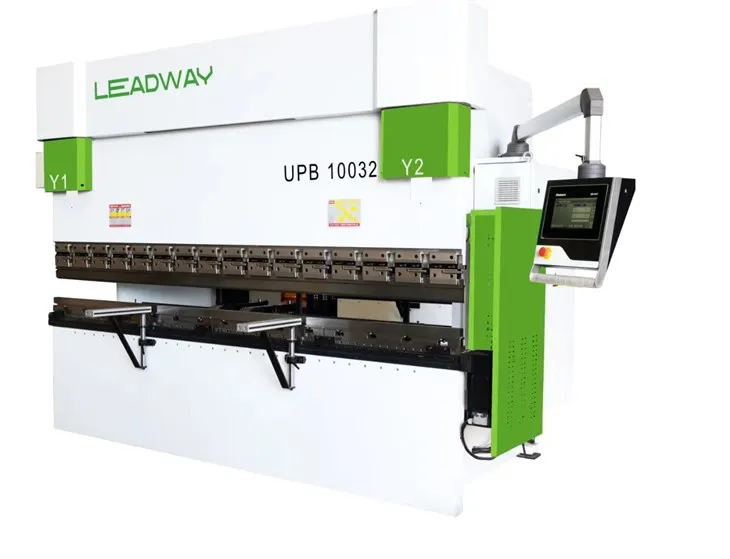
The Hydraulic CNC Bending Machine UPB 60x2550 is a state - of - the - art piece of equipment designed for precision bending of various materials. It combines the power of hydraulic systems with the accuracy of computer numerical control (CNC), allowing for efficient and consistent bending operations.
Factors Affecting the Maximum Bending Thickness
Several factors influence the maximum thickness of the material that the UPB 60x2550 can bend. These include the type of material, the bending radius, the length of the bend, and the die used.
Material Type
Different materials have different mechanical properties, such as yield strength and tensile strength. For example, mild steel is relatively easy to bend compared to stainless steel or aluminum alloys. Mild steel typically has a lower yield strength, which means it can be deformed more easily under the force applied by the bending machine. On the other hand, stainless steel has a higher yield strength, requiring more force to bend. The UPB 60x2550 is designed to handle a wide range of materials, but the maximum bending thickness will vary depending on the specific material.
Bending Radius
The bending radius is another crucial factor. A smaller bending radius requires more force to achieve the desired bend. When the bending radius is small, the material near the bend is subjected to higher stresses. As a result, the maximum thickness of the material that can be bent decreases as the bending radius decreases. For the UPB 60x2550, if you need a tight bend with a small radius, you may have to use a thinner material.
Bend Length
The length of the bend also affects the maximum bending thickness. Longer bends distribute the force over a larger area, which can reduce the stress on the material. However, longer bends may also require more power from the bending machine. If the bend length is too long, the machine may not be able to provide enough force to bend the material to the desired thickness.
Die Selection
The die used in the bending process plays a significant role. Different dies have different geometries and can exert different amounts of force on the material. A well - designed die can help to optimize the bending process and increase the maximum bending thickness. For example, a V - die is commonly used for general bending operations. The width of the V - die and the angle of the V - opening can affect the bending force and the maximum thickness of the material that can be bent.

Maximum Bending Thickness for Common Materials
Based on our experience and testing, here are some approximate maximum bending thicknesses for common materials when using the UPB 60x2550:
Mild Steel
For mild steel with a yield strength of around 235 - 345 MPa, the UPB 60x2550 can typically bend materials up to a thickness of approximately 6 - 8 mm. This is assuming a standard bending radius and a reasonable bend length. If the bending radius is larger or the bend length is shorter, the machine may be able to handle slightly thicker materials.
Stainless Steel
Stainless steel has a higher yield strength than mild steel. For stainless steel with a yield strength of around 205 - 550 MPa, the maximum bending thickness is usually around 4 - 6 mm. The exact thickness will depend on the specific grade of stainless steel and the bending parameters.
Aluminum
Aluminum is a relatively soft material compared to steel. For aluminum alloys with a yield strength of around 100 - 300 MPa, the UPB 60x2550 can bend materials up to a thickness of approximately 8 - 10 mm.
Comparing with Other Models
To give you a better perspective, let's compare the UPB 60x2550 with other models in our UPB series. The UPB Series Hydraulic CNC Bending Machine UPB 150x3100 has a higher bending capacity due to its larger hydraulic power and more robust structure. It can bend thicker materials compared to the UPB 60x2550. On the other hand, the Hydraulic CNC Bending Machine UPB 60x2050 has a shorter working length, which may limit its ability to handle longer bends but can still achieve similar maximum bending thicknesses for shorter bends.
Determining the Maximum Bending Thickness for Your Application
If you are unsure about the maximum bending thickness for your specific application, it is recommended to consult our technical support team. We can provide you with detailed calculations and recommendations based on the material type, bending radius, bend length, and other parameters of your project.
Contact Us for Purchasing and Negotiation
If you are interested in the Hydraulic CNC Bending Machine UPB 60x2550 or any other products in our UPB series, we invite you to contact us for purchasing and negotiation. Our team of experts will be happy to assist you in finding the right machine for your needs and providing you with the best possible pricing and service.
References
- "Metal Forming Handbook: Processes and Applications", Carl T. Yang, Hanser Gardner Publications
- "CNC Machining Handbook", Peter Smid, Society of Manufacturing Engineers