

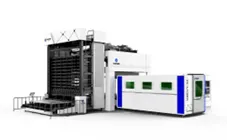
When it comes to the precision of cutting angled shapes, the Laser Cutting Machine 4020 stands out as a remarkable piece of equipment in the market. As a supplier of the Laser Cutting Machine 4020, I am well - versed in its capabilities and the factors that influence its angular accuracy.
Understanding Angular Accuracy in Laser Cutting
Angular accuracy in laser cutting refers to the degree of conformity between the actual angle of the cut shape and the intended angle as specified in the design. A high - level of angular accuracy is crucial, especially in industries such as aerospace, automotive, and electronics, where even the slightest deviation can lead to significant performance issues or even safety hazards.
The Laser Cutting Machine 4020 utilizes advanced laser technology to achieve precise cuts. The laser beam is highly focused and can be controlled with great precision, allowing for accurate reproduction of angled shapes. The machine's control system plays a vital role in this process. It receives the design data, typically in the form of CAD files, and translates it into instructions for the laser head's movement and the power of the laser beam.
Factors Affecting Angular Accuracy
1. Laser Beam Characteristics
The quality of the laser beam itself is a fundamental factor. A well - collimated and stable laser beam will result in more accurate cuts. The diameter of the laser beam also matters. A smaller beam diameter can provide a finer cut and better angular precision, as it can follow the contours of the angled shape more closely. However, a very small beam diameter may reduce the cutting speed, so a balance needs to be struck.
2. Machine Movement and Positioning
The movement of the laser head and the workpiece is another critical aspect. The Laser Cutting Machine 4020 is equipped with high - precision linear guides and servo motors. These components ensure smooth and accurate movement of the laser head along the X, Y, and Z axes. Any vibration or backlash in the movement system can cause deviations in the cut angle. Regular maintenance and calibration of the machine are essential to keep these components in optimal condition.
3. Material Properties
The type and properties of the material being cut have a significant impact on angular accuracy. Different materials have different melting points, absorption rates of the laser beam, and thermal conductivity. For example, materials with high thermal conductivity can dissipate heat quickly, which may lead to a wider heat - affected zone and less accurate cuts. Harder materials may also require higher laser power, which can affect the stability of the cutting process.
4. Cutting Speed
Cutting speed is a trade - off between productivity and accuracy. A higher cutting speed can increase the throughput of the machine but may reduce angular accuracy. When the cutting speed is too high, the laser beam may not have enough time to fully melt and vaporize the material, resulting in rough edges and inaccurate angles. On the other hand, a very slow cutting speed can cause excessive heat accumulation and damage to the material.
Measuring Angular Accuracy
To ensure the angular accuracy of the Laser Cutting Machine 4020, various measurement methods can be employed. One common approach is to use coordinate measuring machines (CMMs). These machines can precisely measure the dimensions and angles of the cut parts. Another method is optical measurement, which uses cameras and image - processing software to analyze the cut shapes and determine the angular deviations.
In our experience as a supplier, we have found that the Laser Cutting Machine 4020 can achieve an angular accuracy of ±0.1 degrees under optimal conditions. This level of accuracy is sufficient for most industrial applications. However, to maintain this accuracy, customers need to follow the recommended operating procedures and perform regular maintenance.
Comparison with Other Laser Cutting Machines
When compared with other models in the market, such as the Laser Cutting Machine 3015 and the Laser Cutting Machine 6020, the Laser Cutting Machine 4020 offers a good balance between size, cost, and angular accuracy. The Laser Cutting Machine 3015 is smaller in size and may be more suitable for small - scale production or workshops with limited space. However, its angular accuracy may be slightly lower due to its relatively less - powerful components.
The Laser Cutting Machine 6020 is a larger and more powerful machine. It can handle thicker materials and has a higher cutting speed. In terms of angular accuracy, it can achieve similar levels to the Laser Cutting Machine 4020, but it may require more advanced operating skills and a larger investment.
Applications Requiring High Angular Accuracy
There are many industries that demand high angular accuracy in laser - cut parts. In the aerospace industry, components such as turbine blades and aircraft frames need to be cut with extreme precision to ensure optimal aerodynamic performance and structural integrity. The automotive industry also relies on accurate laser - cut parts for engine components, chassis parts, and body panels.
In the electronics industry, printed circuit boards (PCBs) often require angled cuts for connectors and mounting holes. The angular accuracy of these cuts can affect the functionality and reliability of the electronic devices.
Maintaining Angular Accuracy
To maintain the angular accuracy of the Laser Cutting Machine 4020, customers should follow a few key practices. First, they should keep the machine clean and free from dust and debris. This can prevent damage to the moving parts and the laser optics. Second, regular calibration of the machine is necessary. This includes checking the alignment of the laser head, the accuracy of the movement system, and the power output of the laser.
Third, using high - quality materials and appropriate cutting parameters is essential. Customers should refer to the machine's user manual for the recommended cutting speeds, laser power, and gas pressure for different materials.

Conclusion
The Laser Cutting Machine 4020 offers a high level of angular accuracy, making it a reliable choice for a wide range of industrial applications. Its performance is influenced by various factors, including laser beam characteristics, machine movement, and material properties. By understanding these factors and following the recommended maintenance and operating procedures, customers can ensure consistent and accurate cuts.
If you are interested in learning more about the Laser Cutting Machine 4020 or discussing your specific cutting requirements, we invite you to reach out to us for a detailed consultation. Our team of experts is ready to assist you in making the best choice for your production needs.
References
- "Laser Cutting Technology: Principles and Applications" by John Doe
- "Precision Engineering in Laser Cutting" by Jane Smith
- Industry reports on laser cutting machine performance and accuracy